You Don’t Need to Become a Prepper. You Need 72 Hours.
“Daddy, when are the lights
coming back?”
60-day money-back guarantee. You get the book first, with the fridge-door card to print. The laminated card comes after, in the mail.60-day money-back guarantee.
If you’ve ever heard that question in a dark kitchen, you know the pause that follows. The video above is about why that pause happens even to prepared people.
If You’d Rather Read Than Watch, Start Below.Same Blackout.
Two Different Homes.
Been through a blackout? Then you know a plan matters. Here’s what having one looks like when the power goes out.
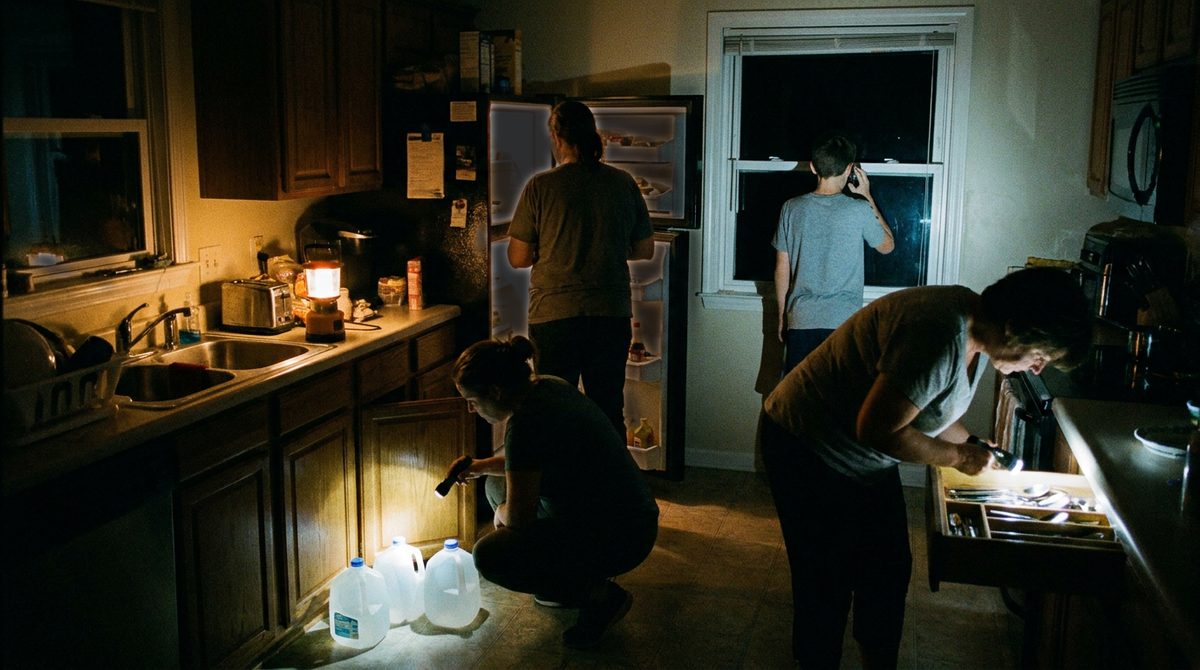
The first kitchenEverything arrives at once.
- Nobody knows what comes first. So everything comes first, and nothing gets finished.
- Someone opens the fridge to see what’s still cold. The FDA’s 4-hour number for a fridge assumes the door stays shut.
- Someone is on hold with the power company, on the phone with the most battery left.
- Two people hunt for the same flashlight. Someone goes next door to check on Grandma. Someone else already went. Nobody knew.
- Someone counts water jugs by flashlight. For the first time.
- A small voice asks when the lights are coming back. It has to wait.
- Every job is also a decision. Every decision is being made for the first time, in the dark.
- It’s cold. Hands are stiff. The kids are tired. Nobody in this kitchen is having a good night.
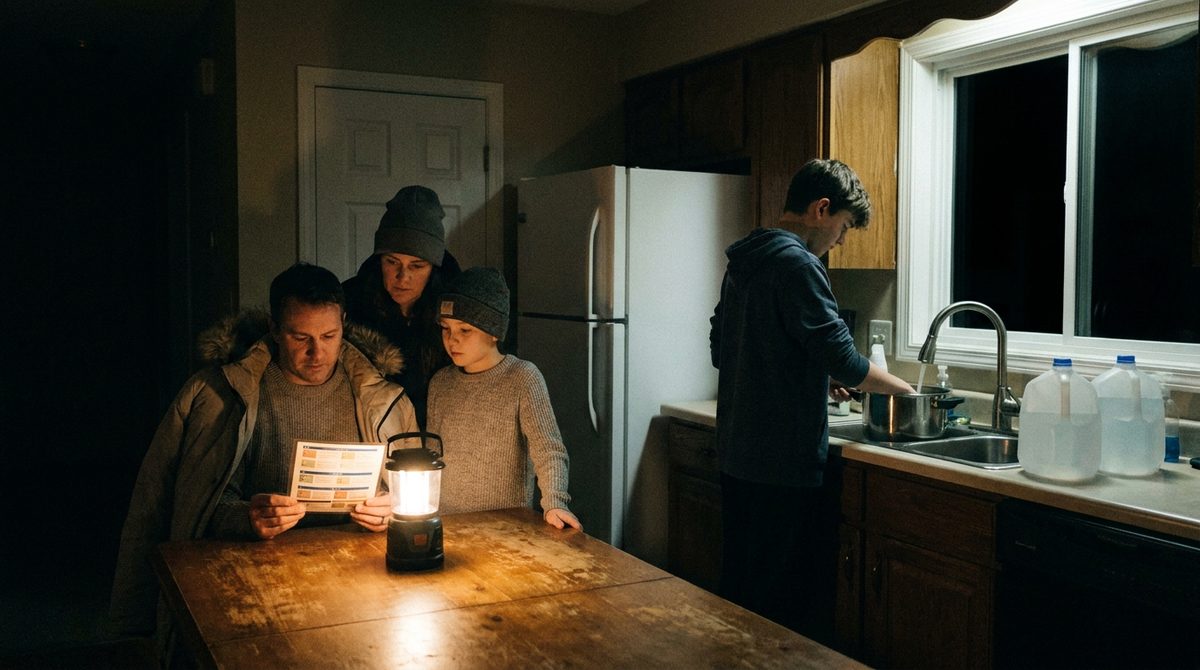
The second kitchenThe order was already decided.
- Nobody decides what comes first. That was settled before tonight, at this same table, with the lights on.
- Someone takes the fridge-door card down and reads the top line out loud. Then the next line.
- The card says to fill the containers while the tap still runs. They get filled.
- The card says the fridge stays shut. Nobody opens it to check.
- Nobody asks who checks on Grandma next door. The family wrote that down.
- A small voice asks when the lights are coming back. “I don’t know when. But I know what we do next.”
- One job at a time.
- It’s cold. Hands too stiff for the lighter. Someone gets grumpy with the kids. The one thing nobody is doing is math in the dark.
What both houses share
- The same two worries down the hall: the medicine that has to stay cold, and a phone that may not get a signal.
- The second one is not a guess. North Carolina’s official after-action review of Hurricane Helene, 2025, recorded total communications blackouts. In many communities, it took multiple days before communications worked again.
- So “wait for a signal” is not a plan tonight. One house is finding that out in the dark. The other worked it out with the lights on.
Now your house.
- Go look at your water. Not what you’d buy on the way home. What’s already there.
- Ready.gov says to store at least 1 gallon of water per person, per day, for at least 3 days, for drinking and sanitation. For 4 people, that is at least 12 gallons. Use your own number for your own house.
- Count what you have. That is the whole test.
That is the whole difference between these two homes. Not gear. Not character. It is about whether the order was decided before the lights went out, or after.
That order is written down in the Blueprint, a digital book. It’s also printed on a card for your fridge door.
A blackout is not one problem. It is 6.
The Power Goes Out.
Here Is What Goes Wrong, In Order.
Nobody ever handed you this order. Almost all of it starts the moment the lights go off.
- 1. The trigger. Everything that runs on house power stops at once. The lights, the fridge, the chargers, the heating or the cooling. Nobody knows yet how long it will last.
- 2. The fridge. The fridge keeps food cold for about 4 hours if it stays unopened. That is the FDA’s number. Food that can spoil, once it has been above 40°F for 4 hours, gets thrown out.
- 3. The water. If the pumps that keep your water moving lose power, pressure starts to drop. Nobody can tell you the hour. What matters is how much water is already in the house.
- 4. Heat and cooling. If your heating or cooling runs on power, it has stopped. The house starts to get cold, or hot. How fast depends on the house. The CDC has written down what cold and heat do to a person.
- 5. Medical and communication. Any medicine that has to stay cold is in that same fridge. Any medical device that runs on house power has lost it. Every phone in the house is on whatever charge it has left. In Hurricane Helene, North Carolina’s own review recorded total communications blackouts.
- 6. Safety and security. It is dark outside as well as inside. No porch light. No lit windows along the street.
6 things,
nearly all at once.
Nothing tells you which one to answer first.
That is why a capable adult can stand in a dark kitchen and not know what to do first. Not fear. Not a character flaw.
We call this order The 72-Hour Home Sequence. This book is built on it.
60-day money-back guarantee.
The book
The 72-Hour Blackout Survival Blueprint is a digital book. It takes you through all 6 stages in the order they happen: what fails, why it fails, and what to do about it.
It is sized to be read in one evening.
Near the end, it picks out 3 things to do first, tonight. It says they take about 20 minutes and cost nothing.
At the back is a fill-in sheet for your own household. Your answers go there, including how much water is in the house.
The fridge-door card comes with it, as a separate file you print. It shows the 6 stages in the order they happen, each with what to do, in big type. Then the laminated card comes in the mail.
What to do at the 6 stages never calls for a bunker, a generator, or a garage full of freeze-dried food. At several of them, it costs nothing at all, because it is a decision rather than a purchase.
It maps what happens once a blackout starts. It does not predict one.
If you’re still deciding, the rest of this page covers:
- What goes wrong at each of the 6 stages, inside one home, and what to do at 2 of them, in full.
- Why the plan has to be decided before the lights go out.
- What recent storms and outages have already done to ordinary households, all of it on the record.
The fridge is only 1 of the 6.
FDA guidance · doors closed
How long does refrigerated food stay safe in an outage?
4 hours.
That’s FDA guidance, and only as long as the doors stay closed. No more than 4.
FoodSafety.gov says a full freezer holds a safe temperature for about 48 hours.
And those 4 hours start the instant the power dies. They don’t wait for anyone to finish deciding.
Here are all 6 again, one at a time, with what to do at 2 of them.
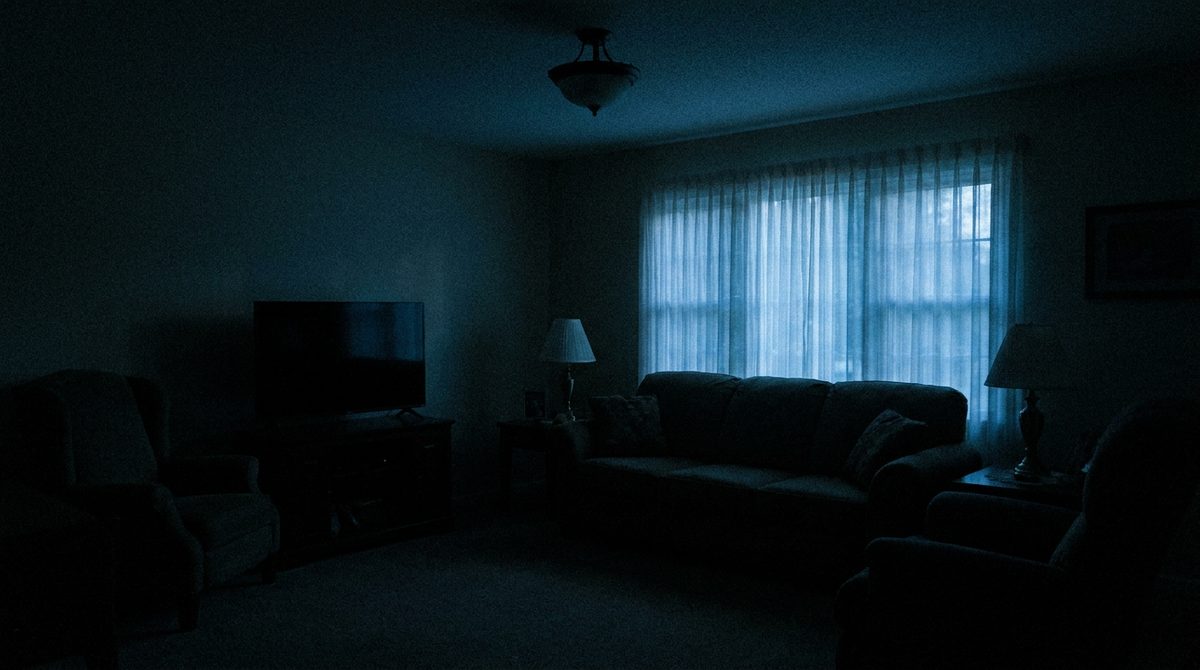
The trigger.
The power dies, and everything that runs on house power stops at once.
Every other stage starts from this one.
What to do at this stage costs nothing, because it is a decision and not a purchase.
You’ll find it in the Blueprint. It is 1 of the 4 this page holds back.
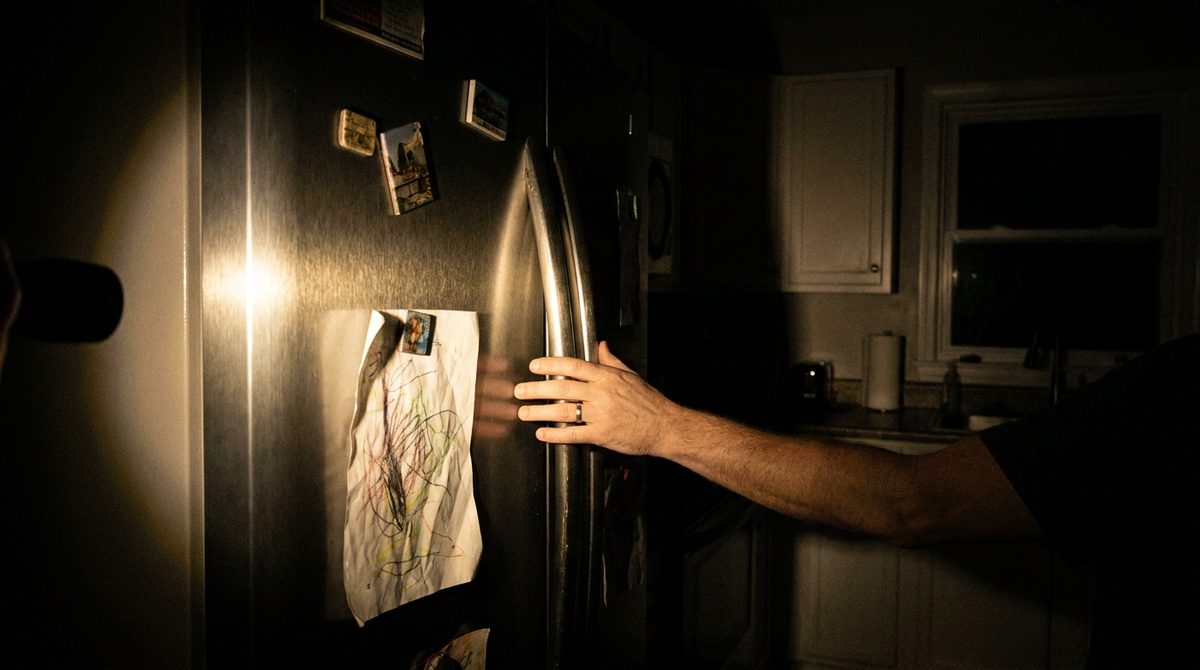
The fridge.
Here is the FDA’s rule to remember. It comes from the FDA’s food-safety page, current as of 2024: “If the power was out for no more than 4 hours, refrigerated food should be safe as long as the doors were kept closed.”
- After 4 hours, throw out any refrigerated food that can spoil and has been above 40°F.
- A full freezer holds its temperature for about 48 hours. A half-full one, about 24.
- Both freezer numbers assume the door stays shut.
What to do, shown in fullA cooler and ice, in the first hour, while those 4 hours are still running.
Simple. Cheap. But only if you know to do it early.
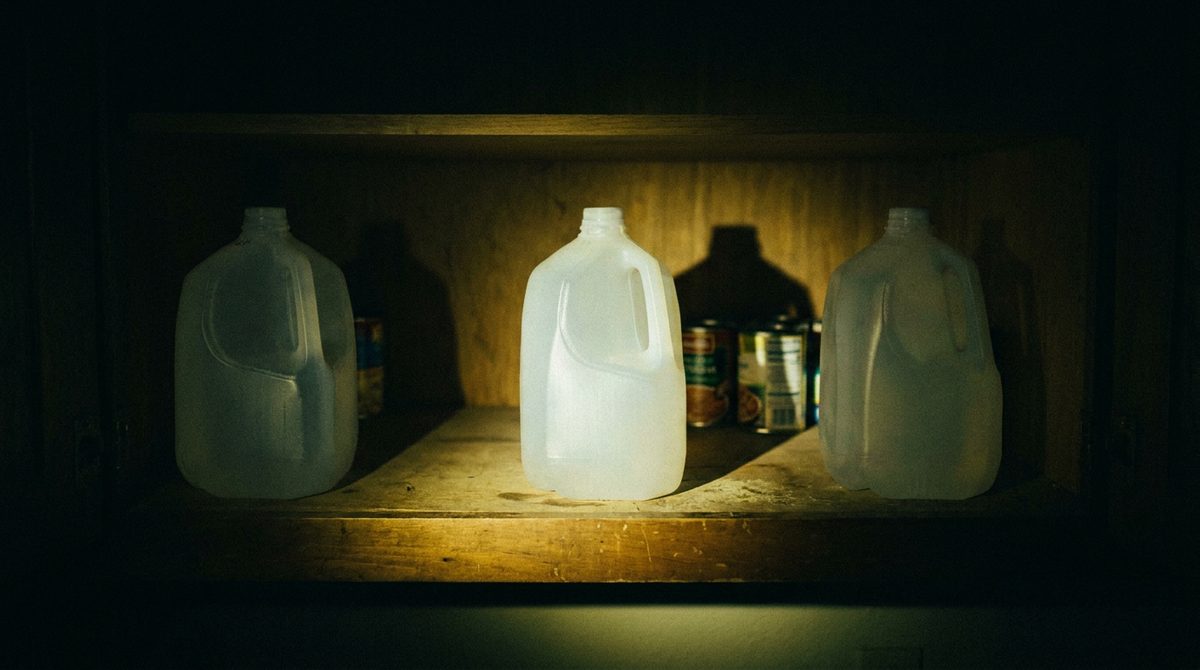
The water.
Ready.gov is the federal government’s site for getting prepared. It says to store at least 1 gallon of water per person, per day, for at least 3 days. That covers drinking and sanitation.
- For a family of 4, that is at least 12 gallons.
- Not what you’d buy on the way home. What is already in the house.
- Ready.gov tells you how many gallons. It doesn’t tell you when.
That is because the taps stop at a different time in every house.
Here is what the sources do say.
Pressure starts to drop the moment the pumps lose power.
What to do, shown in fullFill your containers the moment the outage starts, while pressure is still there.
Not when the taps start to sputter.
So the question is not when. The question is what is on the shelf.
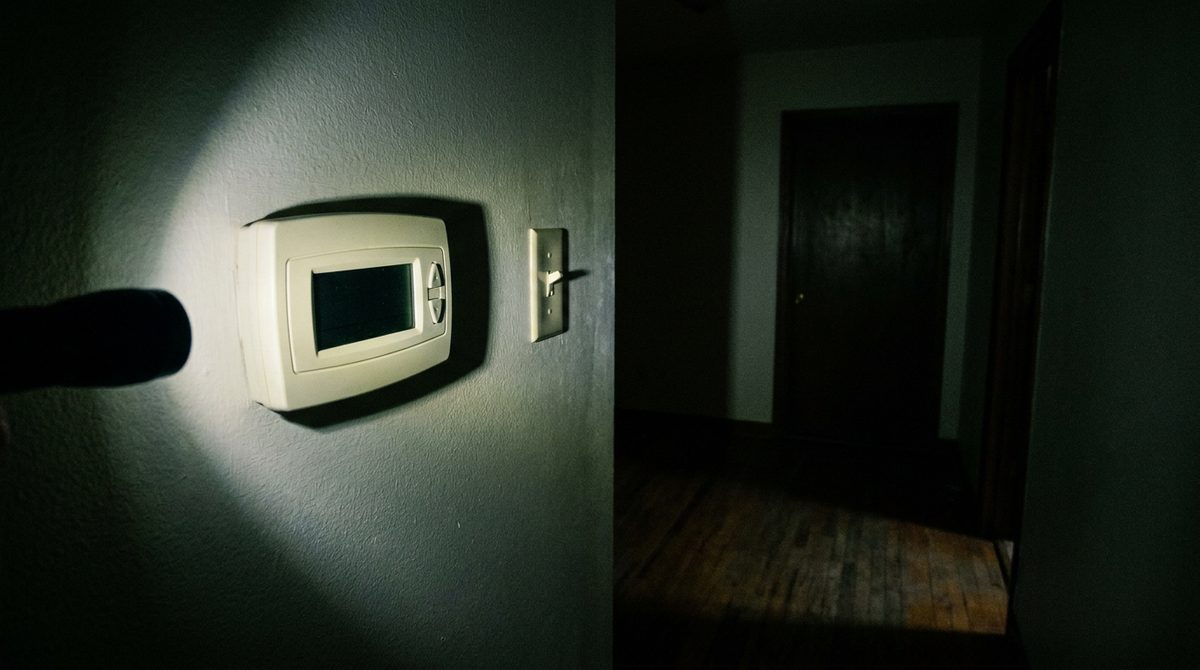
Heat and cooling.
How fast your house gets cold or hot depends on the house. The CDC has written down what cold and heat do to a person.
- For hypothermia, the CDC’s line is a core body temperature of 95°F or lower. The CDC calls that a medical emergency.
- In heat stroke, the CDC reports, body temperature can rise to 106°F or higher within 10 to 15 minutes.
Neither number is about your walls. They’re about the people inside. That is why heat and cooling have their own stage in the order.
What to do at this stage is in the Blueprint.
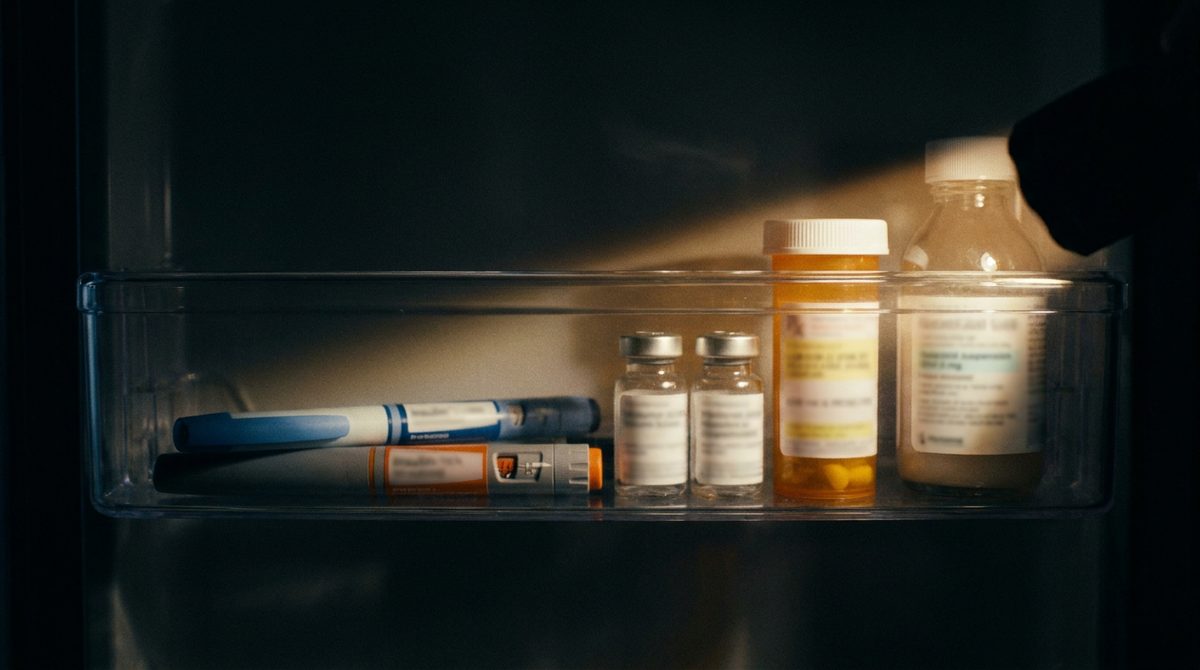
Medical and communication.
3 things in an ordinary house depend on the power staying on.
- Any medicine that has to stay cold.
- Any medical device that runs on electricity.
- Every phone in the house.
- HHS emPOWER Program: more than 3 million Medicare beneficiaries rely on medical equipment that runs on electricity.
- U.S. Census Bureau, October 2024: around 14.5 million households reported having medical devices that need electricity to work.
Nearly a third of those households (31.6%) were affected by power outages. - The same Census Bureau page: 705,000 households, or 2.9% of those with refrigerated medicine, said their medicine spoiled.
And the phone. In a serious outage the network itself can go.
North Carolina published its official after-action review of Hurricane Helene in 2025. It recorded total communications blackouts.
That is a phone with nothing to connect to.
The CDC’s own guidance is to plan backup power for the cellphone anyway. It says the same for the refrigerator, and for any medical device that runs on electricity.
And one warning from the FDA: never run a generator inside a basement, garage, or any enclosed structure, even with the doors and windows open.
What to do at this stage is in the Blueprint.
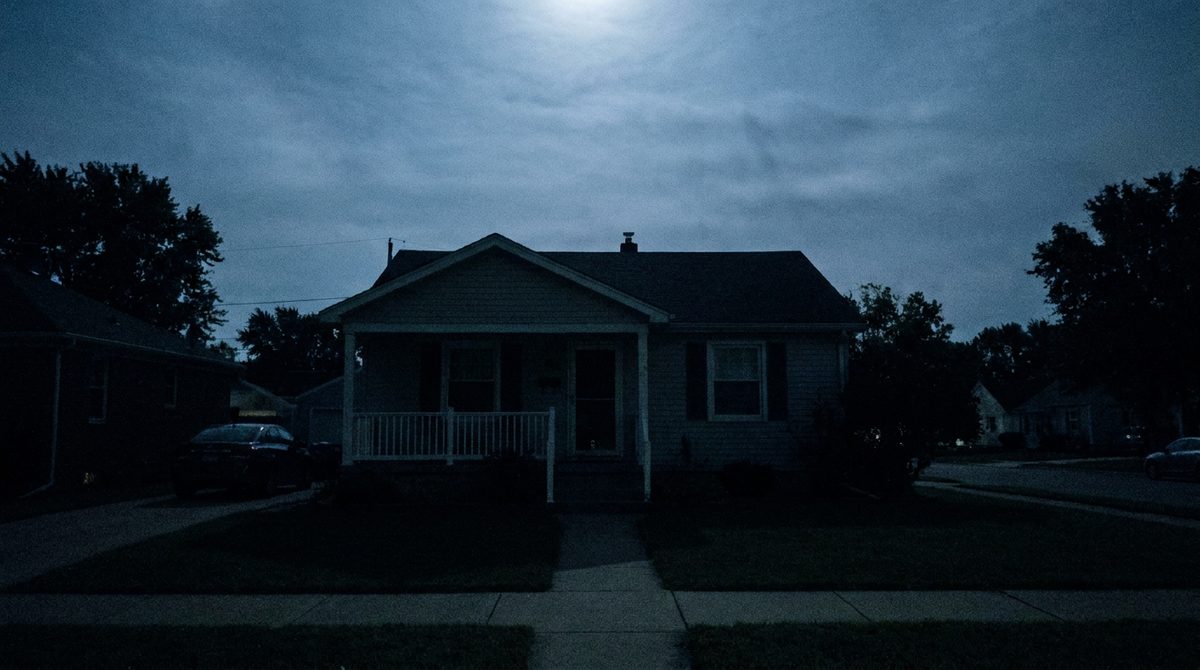
Safety and security.
This stage is plain household sense.
In a long outage, it is dark outside as well as inside. No porch light. No lit windows along the street.
You won’t find a crime number here. None we found is solid enough to print.
What to do at this stage is in the Blueprint.
Those are the 6 stages.
You have just seen what to do at 2 of them, in full: the fridge and the water.
Why show them at all? They are already on the federal pages named above. Charging you for public information is exactly what this brand exists to not do.
The video names the other 4. It does not show them, on purpose.
A step you half-remember is not a plan. Under pressure, a plan only works written down, in the right order, where your whole family can see it.
The other 4 are in the Blueprint.
What Changes On
The Second Night.
On the first night, by the FDA’s own numbers, a full freezer that has stayed shut is still holding its temperature.
Waiting for the power to come back is a reasonable first plan.
Sometimes it comes back fast.
The U.S. Energy Information Administration counts the routine outages, the ones outside major events. For the average customer, they come to about 2 hours in a year.
Sometimes it does not:
- Hurricane Milton, October 2024: about 8 days before the power was mostly on again, by the Department of Energy’s situation reports.
- Winter Storm Fern, January 2026: in Mississippi, 51 percent had power again on day 3.
It took nearly 2 weeks to reach 98 percent.
That is from PowerOutage.com’s March 2026 analysis. - Hurricane Helene, autumn 2024: 19 days after the storm reached land, the Department of Energy’s final report still counted roughly 23,000 customers without power.
None of that says what will happen at your address. It says what has already happened, and for how long.
Put the FDA’s freezer number next to those days.
A full freezer that has stayed shut holds its temperature for about 48 hours.
Day 3 of any outage on that list is past those 48 hours.
You don’t have to guess if the food inside is still good.
FoodSafety.gov gives the test: does it still have ice crystals, or read 40°F or below?
And the water question is the same question it was on night one.
Why have the plan in the house before an outage, and not during one?
The fridge’s 4 hours start the instant the power dies.
Filling the water containers only works while there is still pressure in the pipes.
Neither one waits while somebody looks up what to do.
A plan you read tonight, with the lights on, is already there when the power goes.
A plan you go looking for in the dark is already late.
That is why the order is also printed on a card for the fridge door.
Night two is night one with the same questions, a day later.
It Keeps Happening.
Here Is What Is On The Record.
Not a forecast. Not a warning. Every finding here names who published it, and when.
“Hurricane Helene power outages leave millions in the dark”
Hurricanes Helene and Milton, autumn 2024
- U.S. Department of Energy situation reports, October 2024: the outage in the region was at its biggest on 27 September, when 4.6 million customers had no power.
- North Carolina’s official after-action review, 2025: total communications blackouts.
In many communities, it took multiple days before communications worked again. - Department of Energy, October 2024: at its peak, Hurricane Milton cut the power to 3.4 million customers in Florida.
“Winter storm causes 180,000 power outages in Mississippi”
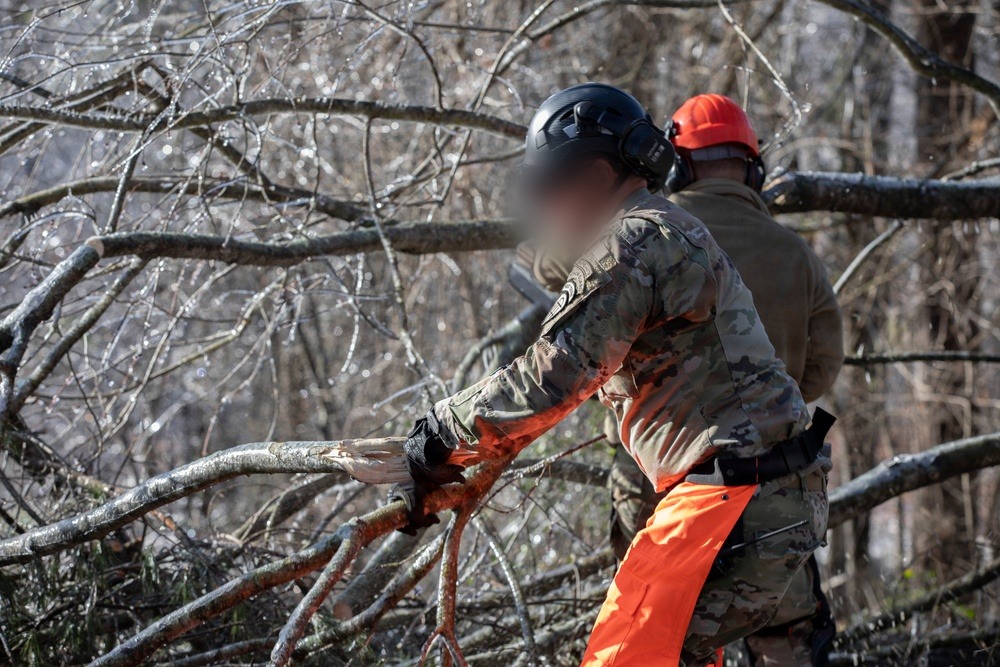
Winter Storm Fern, January 2026
- U.S. Department of Energy, February 2026: the department issued 39 emergency orders and extensions during the winter storms, across most major grid regions.
20 of them were for Fern and a cold snap in Florida.
About a million lost power in Fern. - PowerOutage.com, a firm that tracks outages, March 2026: over 2 million people had no power at the peak, across 10 states.
“Winter Storm Leaves Many In Texas Without Power And Water”
Winter Storm Uri, Texas, February 2021
- FERC, the federal energy regulator, with NERC and NERC’s regional entities, final report, 16 November 2021: the Texas grid operator ordered 20,000 MW of rolling blackouts in total, to keep the grid from collapsing.
The report calls it the largest manually controlled load shedding event in U.S. history. - In plain words: it was the biggest on-purpose power cut in U.S. history.
- The same report: more than 4.5 million people in Texas lost power, some for as long as 4 days.
- The same report, on why: freezing problems and fuel problems together caused 75.6 percent of the cases where a generating unit went out, ran below full power, or failed to start.
What that week was like inside Texas homes.
- A University of Houston survey of 1,500 Texas adults, March 2021: more than 2 out of 3 Texans (69%) lost power at some point from February 14 to 20.
On average, they were without it for 42 hours.
On average, 31 of those hours came in one unbroken stretch. - The same survey, on the storm week as a whole: almost half of Texans (49%) lost running water.
The average Texan who lost it went 52 hours without it. - 75% had difficulty getting food or groceries.
63% had difficulty getting bottled water. - 47% had food spoil.
47% lost cell phone service. - The water, food and phone figures cover the whole storm week.
The survey does not separate what the outage caused from what the freeze caused.
We won’t either.
And across the country
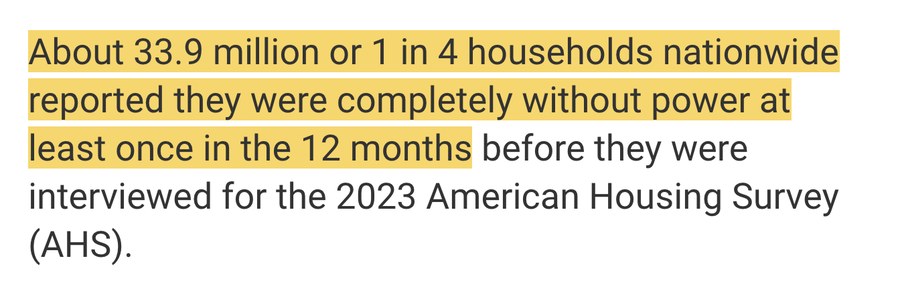
- U.S. Census Bureau, October 2024: about 1 in 4 American households, 33.9 million, reported at least one complete power outage in the previous 12 months.
About 70 percent of those households had at least one outage that lasted 6 hours or more. - In rural areas it was more common.
35.4 percent of rural households reported an outage.
For urban households it was 22.8 percent.
The same Census Bureau page asked what those outages did at home.
- Around 14% of the households that had an outage said they had food that spoiled.
That is 4.9 million housing units. - About 2.9 million households reported they had to stay away from home overnight because of a power outage.
That is 8.4% of the households that had one. - 2.4 million housing units reported someone missing work because of a power outage.
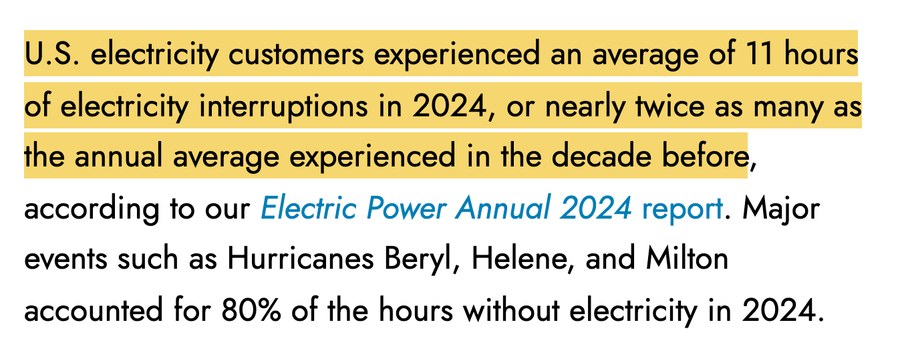
- U.S. Energy Information Administration, December 2025: the average customer went about 11 hours without power in 2024.
That is for the whole year.
It is nearly double the average of the 10 years before.
Major events caused 80 percent of those hours. - In South Carolina, the average was nearly 53 hours.
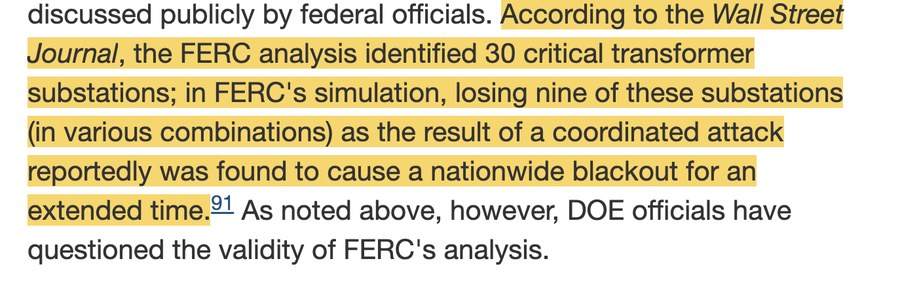
- And this is not new. As far back as 2013, FERC reportedly found this: knocking out as few as 9 of the country’s roughly 30 most critical high-voltage substations could cause a coast-to-coast blackout.
Wall Street Journal, March 2014.
That is the record.
It does not predict anything.
It is what already happened, on those dates, for as long as those institutions say it lasted.
No predictions. Nobody on this page will make one.
Not affiliated with, endorsed by, or sponsored by any government agency.
Now put your own family in one of those houses.
Same storm. No power. And nobody can tell you for how long.
What do you do first?
What about the food in the fridge?
How much water is in the house right now?
Who needs a phone that works? Who needs medicine kept cold?
If you paused just now, that is not a failure of intelligence or grit.
It is what figuring it out looks like when 6 things are going wrong at once.
It Was Never
The Gear
Gear answers one question: what do I own.
A blackout asks a different one: what do I do first?
You’re not behind because you lack gear.
You’re not behind because you don’t worry enough.
The video walks all 6 stages, in the order they arrive, and names its federal sources on screen.
Maybe you’re thinking this.
“I’m a capable person. When it happens, I’ll figure it out.”
That is not a foolish thought. You’ve handled everything else life has handed you.
But go back to the record above.
Millions of people lost power in those storms. That is not one type of person.
It is everybody on the street. The careful and the capable, along with everyone else.
With 6 things going wrong at once, figuring it out looks like this.
You’re deciding about the fridge while the water pressure is dropping.
You’re looking for the flashlights while the phone battery runs down.
You’re searching “how long does food last without power” while the fridge’s 4 hours are already running.
That is what one step behind looks like.
Every decision made in the moment is made one step behind a clock that is already running.
That is not a character test. It is arithmetic.
You don’t need to be smarter. You need the order, written down.
Decisions made at a kitchen table on an ordinary evening, with the lights on.
A dark hallway is a hard place to make them.
2 questions you should be asking
“Is this another fear pitch?”
If part of you is asking that, keep asking. That instinct is doing its job. Every claim this page and the video make about the grid or a threat names its institution, and its date where one exists. No unnamed insiders. No “officials warn.” No date attached to any future event, because nobody honest has one. If a line here reads like shouting, hold us to that.
“Can’t I get this free from the government?”
Partly, and you should look. FDA, Ready.gov, CDC: free, worth reading, and every one of them organized by topic. Food safety on one page. Water on another. None of them puts the 6 stages in the order your own house fails in. That is what the Blueprint is.
SURVIVAL
BLUEPRINT SIX STAGES. ONE PLAN FOR YOUR HOME.
The 72-Hour Blackout Survival BlueprintThe digital book
The fridge-door card, as a file you print
The laminated fridge-door card, in the mail
The digital book
What’s Inside The Blueprint
The 72-Hour Blackout Survival Blueprint is the only product that walks the whole order end to end.
The promise is the order, not the gear.
- The complete order, hour by hour: all 6 stages, each with what fails, why it fails, and what to do about it.
- What to do at all 6 stages, written down, in order: the 2 the video and this page show, and the 4 they hold back.
- Every sourced claim cited by agency, dated where a date exists, right there on the page, so you can verify it before you rely on it.
- We label which stages rest on documented findings and which rest on practical reasoning, so you never have to guess where the sourcing ends.
- 5 of the 6 stages carry a stated time frame. The water stage carries a range instead, deliberately: no federal source gives a fixed hour for when a home’s water dies.
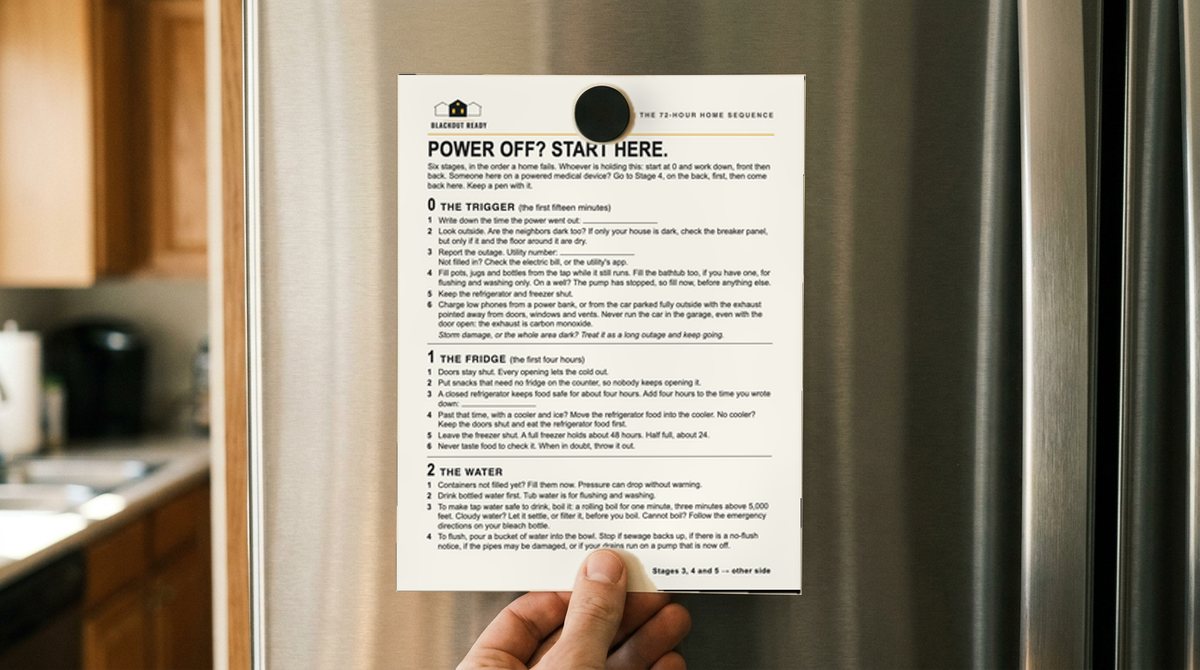
The fridge-door card
There is nothing to remember. It is on the fridge.
The fridge-door card shows the 6 stages in the order they happen, each with what to do. It is in big type. Anyone in the household can read it under stress. It comes with the book as its own separate file you can print. Then the laminated card comes in the mail.
REVIEW BUILD ONLY · 12 empty testimonial slots (3 video, 9 photo or screenshot) · this section stays hidden on the live page until real ones exist
Why It’s Only $27
To piece even the raw parts together from the guides in this space, you’d buy three or four of them at $37 - $39 apiece.
That’s $110 to $160, and you’d still not have the sequence, because not one of them is built on it.
As the standalone planning resource it is, $97 would be a fair sticker.
The reason it’s 27 is a number in FEMA’s own reporting.
FEMA’s 2024 National Preparedness Report draws on the National Household Survey. It found that fewer than 40% of American adults report having savings set aside for a disaster.
Draw your own conclusion from that. Ours is this: a plan does its job by ending up on refrigerator doors, not by being expensive.
And no countdown under this button, no stock counter, no deadline. None would be true.
The only real clock in this subject is the one in your own kitchen.
+ the fridge-door card, as a file you print
+ the laminated fridge-door card, in the mail
60-day money-back guarantee.
60-Day Money-Back Guarantee
Read it, print it, put it on the fridge, walk your family through it. If you don’t feel it delivered exactly what we’ve described, ask within 60 days and you get every dollar back.
It is a refund on the product itself, not on any outcome. Nobody can guarantee you outcomes in an emergency. Walk away from anyone who says they can.
What happens when you click
- You land on the order page. The Blueprint is $27.
- Beside it, one optional add-on: a stockpile list and family plan worksheet, $12. Tick it or skip it. The Blueprint is complete on its own.
- Both are covered by the 60-day guarantee.
- The book comes first, with the printable fridge-door card. The laminated card follows in the mail.
Your Questions
What exactly do I get?
The 158-page digital Blueprint, and the fridge-door card as a file you print. The book comes first, with the card file. The laminated fridge-door card is mailed to you separately.
What format is the Blueprint in?
It is a digital book, 158 pages. The fridge-door card is inside as its own separate file, so you print one page and not the whole book.
Do I need to print the card myself?
Yes. The file is yours to print at home or at a copy shop. The laminated card is also mailed to you, separately.
I rent. Does the card still work?
It is a printed sheet, held up by any fridge magnet. It is not fixed to the property, so it goes wherever your fridge does.
What if I'm not technical?
The card exists so nobody has to be. It is 6 stages, written down, in plain type, meant to be read under stress by any member of the household.
You don’t have to become a prepper, and nothing about this purchase makes you one.
This is the same quiet kind of ready as knowing first aid, or keeping a fire extinguisher under the sink. One skill, handled.
It is not the gear.It was never the gear.It is the sequence.
Click the button, and the Blueprint is on its way to you.
Get the Blueprint, $2760-day money-back guarantee.