60-day money-back guarantee. The book comes first, with the printable fridge-door card; the laminated card follows in the mail.60-day money-back guarantee.
If you’ve ever heard that question in a dark kitchen, you know the pause that follows. The video above is about why that pause happens even to prepared people.
It Keeps Happening. Here Is The Last Two Years, On The Record.
Not a forecast. Not a warning. Each finding carries the name of whoever published it, and when.
WJTV Jackson · 25 Jan 2026
“Winter storm causes 180,000 power outages in Mississippi”
Attributed as text, per the closed-set imagery rule; not a screenshot of the outlet’s page.
Lane 1, checked and held back, Koen’s callDVIDS 9490744 (SSgt Derek Gutierrez, Texas Military Dept, 23 Jan 2026) was pulled and opened directly. It shows two service members’ faces clearly. Public domain and properly credited either way, but using a specific person’s face on a commercial ad is your call, not one to make by pulling the next frame that happens to avoid faces. DVIDS’ full Fern gallery has other frames if a no-face shot is wanted instead.
Winter Storm Fern, January 2026
U.S. Department of Energy, February 2026: 39 emergency orders and extensions during the winter storms, 20 of them for Fern, across most major grid regions. Approximately a million customers lost power.
PowerOutage.com, an outage-analytics firm, March 2026, counting people rather than customers: over two million without power at the peak, across ten states. Mississippi 51 percent restored by day three. Nearly two weeks to reach 98 percent.
CBS News · 29 Apr 2025
“Power outage in Spain and Portugal brings much of Europe’s Iberian Peninsula to a standstill”
Attributed as text. No US federal imagery exists for this event.
Typographic treatment, not a photograph, pending assetNo US federal imagery exists for this event (`46` §F4). The Red Eléctrica timeline set as type, not a stock image.
Spain and Portugal, 28 April 2025
Red Eléctrica, Spain’s grid operator: the blackout began at 12:33. Full re-energisation of the transmission grid took until roughly four the next morning. 99.95 percent of demand restored by seven.
ENTSO-E expert panel, 49 members, final report March 2026: many interacting factors. Oscillations, gaps in voltage control, rapid output reductions, cascading generator disconnections. A modern grid, in a wealthy country.
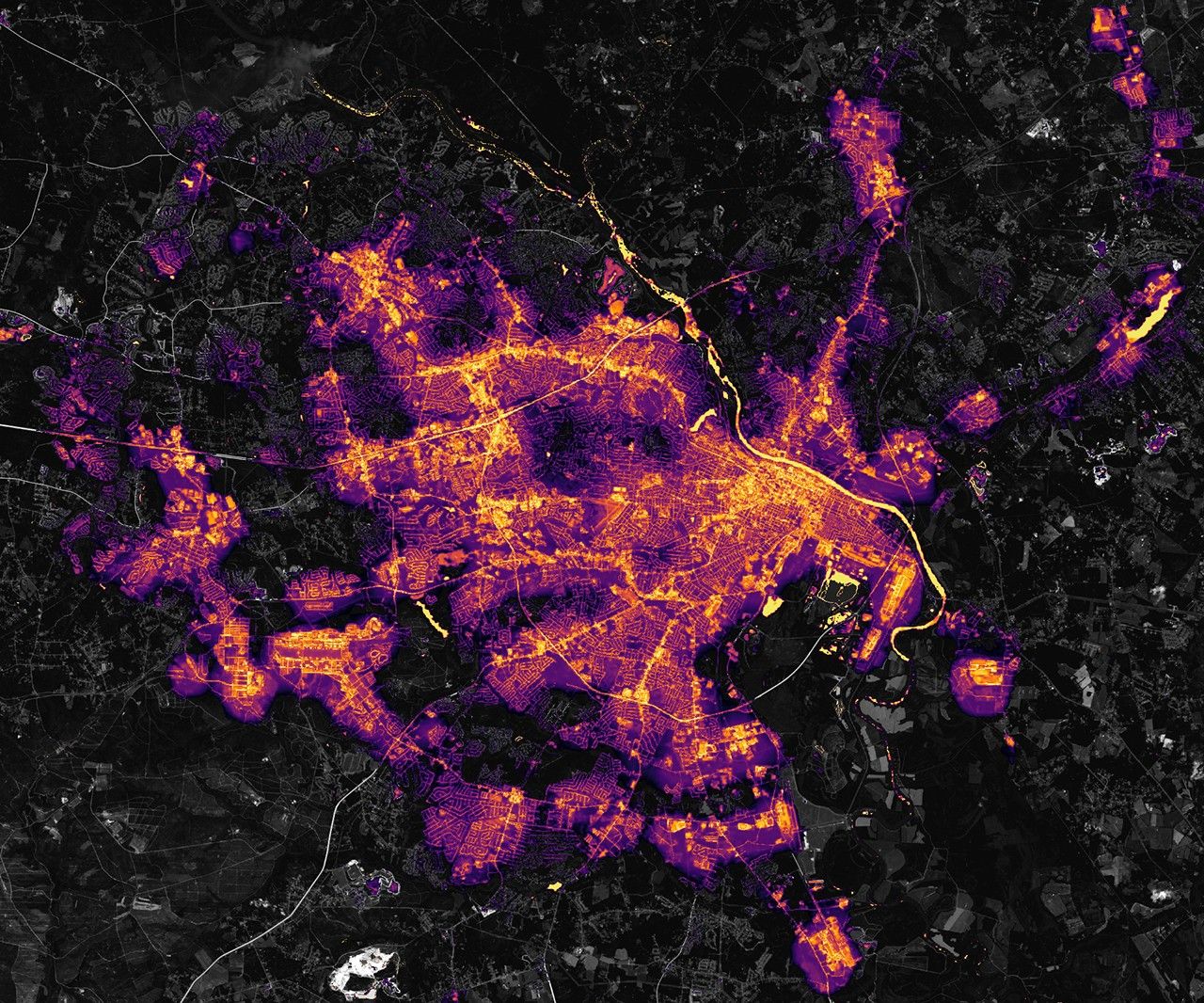
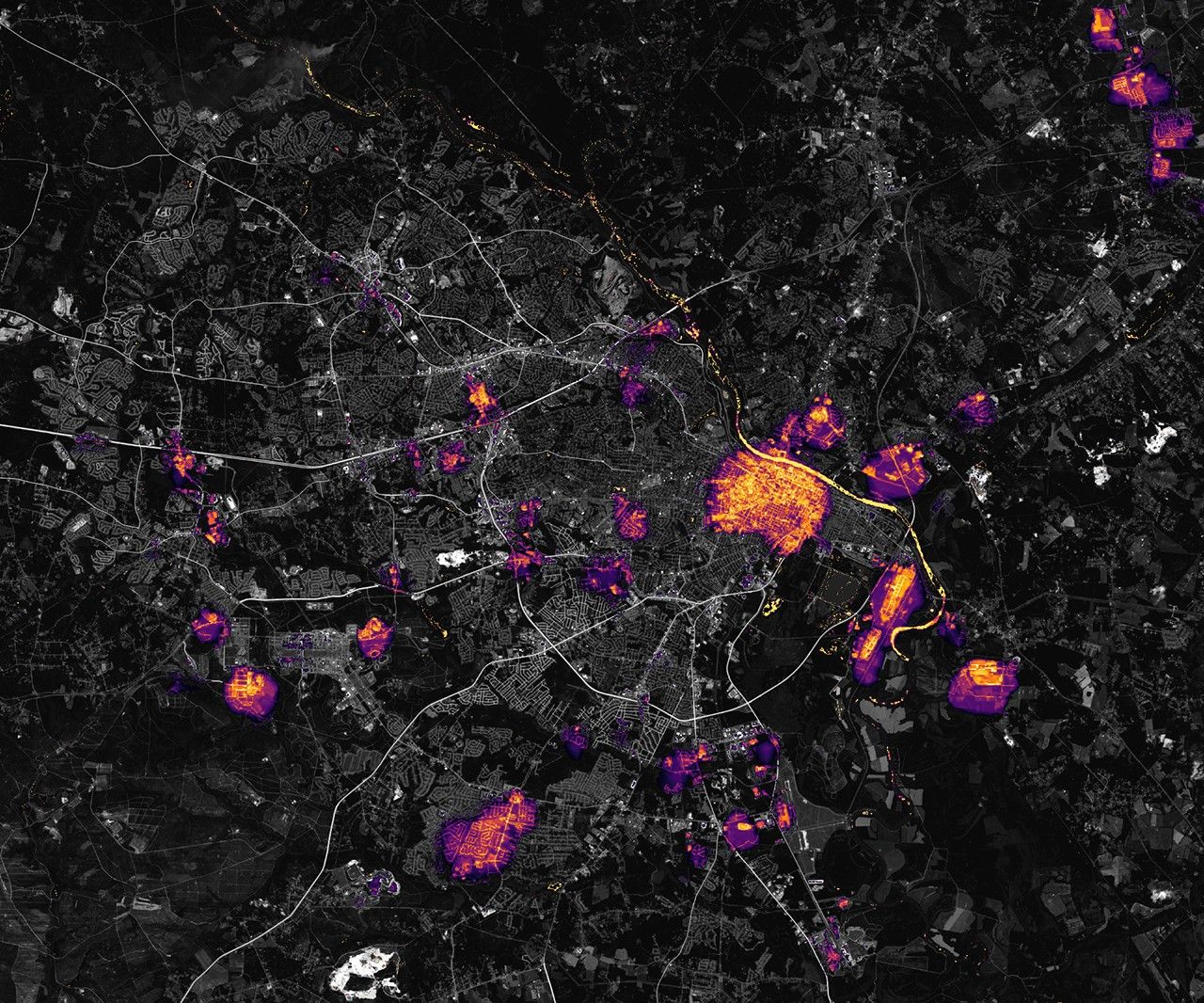
The Current · 30 Sep 2024
“Hurricane Helene power outages leave millions in the dark”
Attributed as text. The photo below is what the after-action record looked like, from space.
Before, August 2024
After, 28 Sep 2024
NASA Earth Observatory · VIIRS night-lights, Black Marble data, Aug vs. 28 Sep 2024 · Credit: NASA Earth Observatory images by Lauren Dauphin, using Black Marble data courtesy of Ranjay Shrestha/NASA Goddard Space Flight Center · public domain
Lane 1, checked and rejectedDVIDS 8668822 was sourced as “USACE Temporary Emergency Power mission, generators staged.” Opened directly: it is an unrelated commercial tow truck hauling equipment, no USACE markings, no generators. The listing’s own description did not match the photo, so it is not used. A real match still needs sourcing; the NASA photo above is carrying this event’s visual weight for now.
Hurricanes Helene and Milton, autumn 2024
U.S. Department of Energy situation reports, October 2024: Helene’s regional outage peaked at 4.6 million customers on 27 September. Nineteen days after landfall, the final federal report still counted roughly 23,000 customers without power.
North Carolina’s official after-action review, 2025: total communications blackouts, with communications taking multiple days to restore in many communities.
Department of Energy, October 2024: Hurricane Milton took out 3.4 million customers in Florida. About eight days to mostly restored.
And the year as a whole
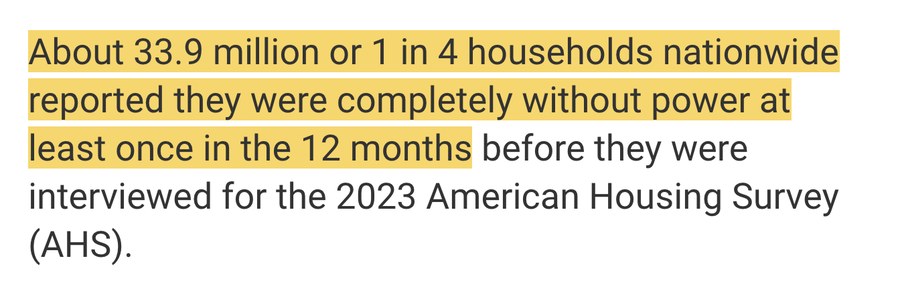
U.S. Census Bureau, October 2024: about one in four American households, 33.9 million, reported at least one complete power outage in the previous twelve months. About 70 percent of those had at least one outage lasting six hours or more.
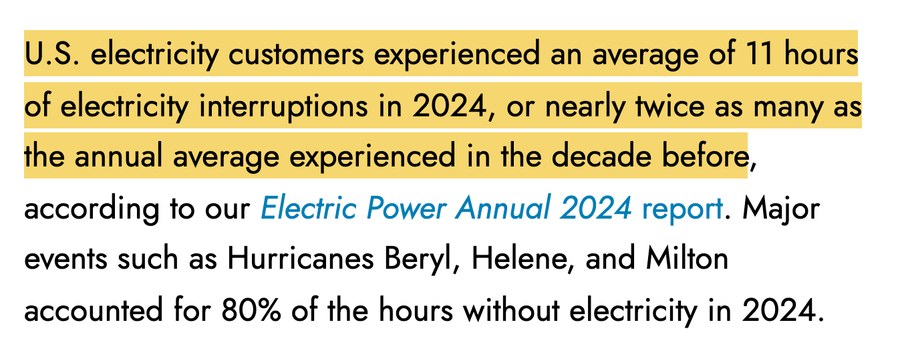
U.S. Energy Information Administration, December 2025: the average customer went about eleven hours without power in 2024, nearly double the previous decade’s average. Major events caused 80 percent of those hours.
That is the record. It is not a prediction of anything. It is what has already happened, on those dates, for as long as those institutions say it lasted.
The first 72 hours inside one home. Yours.
02The first clockThe brief
4hours
The fridge is only the first clock.
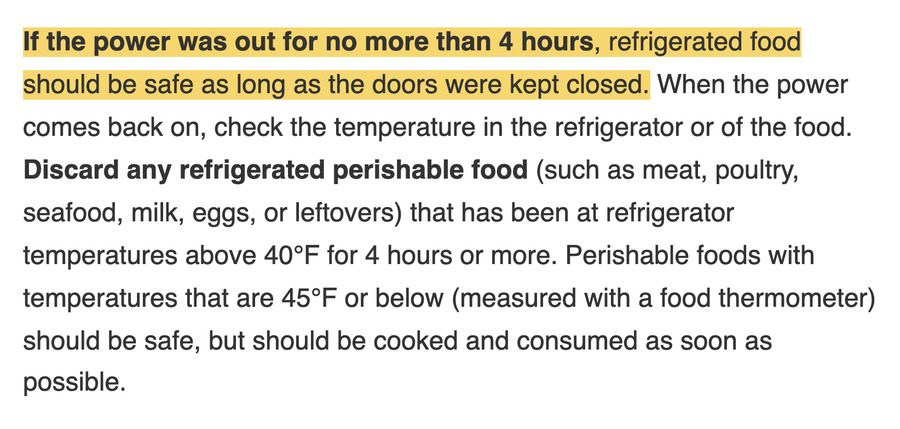
FDA guidance · doors closed
How long does refrigerated food stay safe in an outage?
Four hours.
That’s FDA guidance, and only as long as the doors stay closed. No more than four.
FoodSafety.gov puts a full freezer at approximately forty-eight hours.
And that clock starts the instant the power dies. It doesn’t wait for anyone to finish deciding.
FDA.gov · Food and Water Safety During Power Outages and Floods · screenshot, highlight added
The refrigerator is the first question.
Lane 2, licensed stock, pending assetA refrigerator door, closed, in a dark kitchen, lit only by a flashlight held out of frame. No people.
The fridge.
The FDA’s rule, from its food-safety page current as of 2024, is the one to remember: “If the power was out for no more than 4 hours, refrigerated food should be safe as long as the doors were kept closed.”
Past four hours, anything perishable that has sat above 40°F gets thrown out.
A full freezer holds its temperature for approximately 48 hours. Half full, about 24.
Both freezer numbers assume the door stays shut.
Lane 2, licensed stock, pending assetA pantry shelf with a few bottles of water on it, clearly not many. Overhead or eye level. No people.
The water.
Ready.gov, the federal government’s preparedness site, says to store at least one gallon per person, per day, for at least three days, for drinking and sanitation.
For a family of four, that is at least twelve gallons.
Not what you’d buy on the way home. What is already in the house.
Ready.gov gives you a number of gallons and no clock, because when the taps stop is different in every house. What the sources do say is that pressure starts dropping the moment the pumps lose power.
So the question is not when. The question is what is on the shelf.
Lane 2, licensed stock, pending assetA phone screen showing full battery and no signal bars. Close, no face.
The phone.
In a serious outage the network itself can go. North Carolina’s official after-action review of Hurricane Helene, published in 2025, recorded total communications blackouts, with multiple days to restore communications in many communities. That is a charged phone with nothing to connect to. The CDC’s own guidance is to plan backup power for the cellphone anyway, alongside the refrigerator and any medical device that runs on electricity.
Lane 2, licensed stock, pending assetA thermostat with a blank display, or a ceiling fan stopped. Dark room. No people. Nothing that implies an interior temperature.
The temperature.
How fast your house gets cold or hot depends on the house. What cold and heat do to a person, the CDC has written down.
The CDC’s threshold for hypothermia is a core body temperature below 95°F, which it calls a medical emergency.
In heat stroke, the CDC reports, body temperature can rise to 106°F or higher within ten to fifteen minutes.
Neither number is about your walls. They’re about the people inside, and they’re why heat and cooling have their own stage in the Sequence.
Lane 2, licensed stock, pending assetA small cooler on a kitchen counter, lid open, ice packs visible. No people.
The medicine.
Two things in an ordinary house depend on the power staying on: any medicine that has to stay cold, and any medical device that runs on electricity. The CDC has published guidance on both. The move for this stage is in the Sequence.
And one warning from the FDA: never run a generator inside a basement, garage, or any enclosed structure, even with the doors and windows open.
Five questions. None of them waits for the others. None of them is a secret, either. Every one of those numbers is public.
None of those sources puts the questions in an order. That is the part that was never handed to you.
03Night twoThe restoration clock, not a guess
What Changes On The Second Night.
The first night, by the FDA’s own window, a shut freezer is still frozen. Waiting for the power to come back is a reasonable first plan.
Sometimes it comes back fast. Red Eléctrica reported 99.95 percent of Spain’s demand restored by seven the morning after the April 2025 blackout.
Sometimes it does not:
Hurricane Milton, October 2024: about eight days to mostly restored, by the Department of Energy’s situation reports.
Winter Storm Fern, January 2026: Mississippi 51 percent restored on day three, and nearly two weeks to reach 98 percent, by PowerOutage.com’s March 2026 analysis.
Hurricane Helene, autumn 2024: nineteen days after landfall, the Department of Energy’s final federal report still counted roughly 23,000 customers without power.
Lane 1, CONFIRMED, already used aboveThe same NASA Augusta before/after pair now runs in Section 01 beside the Helene event, since it is the strongest single proof image on the page. Savannah and Valdosta pairs from the same NASA release are downloaded and available if this section should carry its own distinct image instead of repeating Section 01’s.
None of that says what will happen at your address. It says what has already happened, and for how long.
Put the FDA’s freezer number next to those days. A full freezer that has stayed shut holds its temperature for approximately 48 hours. Day three of any outage on that list is past that window. You don’t have to guess whether what’s inside is still good. FoodSafety.gov’s test is whether it still holds ice crystals or reads 40°F or below. And the water question is the same question it was on night one.
That is why the Sequence is a card on a fridge door, and not only pages in a book. Night two is night one with the same questions, a day later.
04On the recordNamed sources
What’s On The Record
11 hours
The average American customer spent about eleven hours without power in 2024, nearly twice the average of the decade before.
EIA.gov · screenshot, highlight addedEnergy Information Administration, December 2025.
1 in 4
About one in four American households had at least one complete power outage in the previous twelve months.
Census.gov · screenshot, highlight addedU.S. Census Bureau, October 2024.
2013
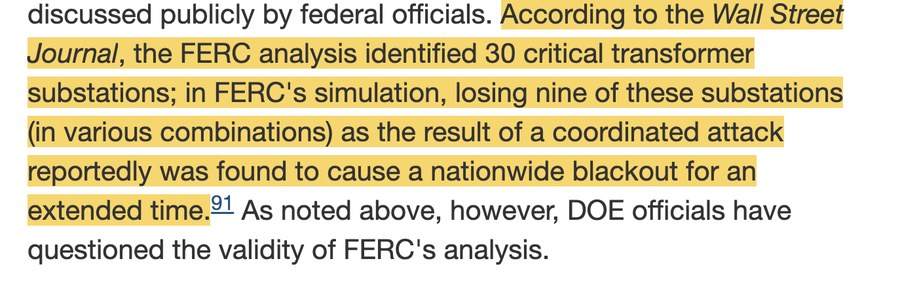
And this is not new. As far back as 2013, FERC, the federal energy regulator, reportedly found that disabling as few as nine of the country’s roughly thirty most critical high-voltage substations could cause a coast-to-coast blackout.
Congressional Research Service report, June 2014, citing the Wall Street Journal on FERC’s 2013 analysis · highlight addedWall Street Journal, March 2014.
No predictions, and nobody on this page will make one.
This is what sits on the record, with the institutions that put it there named beside it.
Not affiliated with, endorsed by, or sponsored by any government agency.
05The orderThe 72-Hour Home Sequence
It Was Never The Gear
Gear answers one question: what do I own. A blackout asks a different one: what do I do first?
You’re not behind because you lack gear.
You’re not behind because you don’t worry enough.
A blackout is not one problem. It is 6 problems, arriving in a row, each on its own clock.
We call that order The 72-Hour Home Sequence; from here on, the Sequence.
The video walks all six stages, in the order they arrive, and names its federal sources on screen.
Every decision made in the moment is made one step behind a clock that is already running.
That is not a character test. It is arithmetic.
06Two homesDecision load, not character
Same Blackout. Two Different Homes.
Same night. Same six clocks. One kitchen already knew which one came first.
Lane 2, licensed stockLeft: an adult crouched at a pantry shelf, counting water jugs by flashlight, concentrating, not panicked.
Lane 2, licensed stockRight: an adult standing at the fridge with the printed card in hand, same tired posture. Same storm through the window in both.
Same storm. Same night. Same moment the refrigerator hum stops and the house goes quiet in a way it never is otherwise.
Two kitchens, both imagined, both ordinary. Nobody in either one did anything wrong to get here.
Both are the kind of household that handles things. Neither is the kind you’d see in a prepper video.
Both are about to face the same six questions, whether anyone’s thought about it yet or not.
A comparison like this is an easy thing to fake. So this one stops before morning, and doesn’t say what either kitchen finds when the sun comes up.
It can show what each adult is doing with their hands tonight, while the storm is still outside.
In the first kitchen, someone is standing at the sink working out the water math for the first time, by flashlight. Ready.gov, the federal government’s own preparedness site, recommends at least one gallon of water per person, per day, for at least three days: at least twelve gallons for a family of four. Whether it’s already in the pantry, or whether it means a drive to a store that may or may not be open, they’re working that out right now, for the first time.
In the second kitchen, that math got done on an ordinary afternoon with the lights on, and the number got written down in the back of the Blueprint. The card on the fridge says what to check first.
Nobody there is proud of it. Someone’s fingers are too cold to work the lighter on the second try. Someone’s a little short with the kids. They’re just not also doing arithmetic.
Down the hall, both households will reach for the same two things: whatever medicine in the house needs to stay cold, and a phone that may or may not find a signal. North Carolina’s 2025 after-action review of Hurricane Helene recorded total communications blackouts, with communications taking multiple days to restore in many communities.
“Wait for a signal” is not a plan tonight. One house is deciding what to do about that right now. The other decided it on the same ordinary afternoon.
Go run the water number on your own kitchen, because the only way to know it is to look.
Not what you’d buy on the way home. What’s already there.
Count it against at least twelve gallons for four people, or your own number for your own household. Either you know it, or you’re about to find out. That’s the whole exercise: not a countdown, a count.
That is the whole difference between these two homes. Not gear. Not character. It is about whether the order was decided before the lights went out, or after.
That order is the Sequence. It is inside the Blueprint, and it is printed on the card that goes on your fridge.
Lane 2, licensed stock, or the product render, pending assetClose, well-lit shot of the fridge-door card alone, one corner slightly curled as if handled, the six stages visible in plain numbered type. No hands, no staging. (`_assets/Blackout-Ready-Fridge-Card-RENDER-both-sides.png` already exists as a starting point.)
Each of the six stages has one move that interrupts it before it lands on your family.
Two of the six, the video shows you outright, because the federal pages you’re invited to check already carry them. Charging you for public information is the kind of thing this brand exists to not do.
The other four are named in the video and deliberately not shown there. They are in the Blueprint, written down, in order.
A move you half-remember is not a plan. Under pressure, a plan only works written down, in the right order, where your whole family can see it.
Not one of the six moves requires a bunker, a generator, or a garage full of freeze-dried food. Several of them cost nothing at all, because they are decisions rather than purchases.
08What you getThe Blueprint
BLACKOUT READYTHE 72-HOURBLACKOUT SURVIVAL BLUEPRINTSIX STAGES. ONE PLAN FOR YOUR HOME.
The 72-Hour Blackout Survival BlueprintThe digital book · 158 pages
+
The fridge-door card, as a file you print
+
The laminated fridge-door card, in the mail
The digital book · 158 pages
What’s Inside The Blueprint
The 72-Hour Blackout Survival Blueprint is the only product that walks the whole Sequence end to end.
The promise is the order, not the gear.
The complete Sequence, hour by hour: all six stages, each with what fails, why it fails, and the one move that interrupts it.
All six moves, written down, in order: the two the video shows and the four it holds back.
Every sourced claim cited by agency, dated where a date exists, right there on the page, so you can verify it before you rely on it.
We label which stages rest on documented findings and which rest on practical reasoning, so you never have to guess where the sourcing ends.
Five of the six stages carry a stated time frame. The water stage carries a range instead, deliberately: no federal source gives a fixed hour for when a home’s water dies.
Sized to be read in one evening.
It maps what happens once a blackout starts. It does not predict one.
The fridge-door card
There is nothing to remember. It is on the fridge.
The fridge-door card: the six stages in the order they happen, each with what to do, in big type, readable under stress by any member of the household. It comes with the book as its own separate file you can print, and then laminated, in the mail.
Near the end, the Blueprint picks out three things to do first, tonight. It says they take about twenty minutes and cost nothing.
Why It’s Only $27
To piece even the raw parts together from the guides in this space, you’d buy three or four of them at $37 - $39 apiece.
That’s $110 to $160, and you’d still not have the sequence, because not one of them is built on it.
As the standalone planning resource it is, ninety-seven dollars would be a fair sticker.
The reason it’s 27 is a number in FEMA’s own reporting: its 2024 National Preparedness Report, drawing on the National Household Survey, found that fewer than 40% of American adults report having savings set aside for a disaster.
Draw your own conclusion from that. Ours is that a plan does its job by ending up on refrigerator doors, not by being expensive.
And no countdown under this button, no stock counter, no deadline. None would be true.
The only real clock in this subject is the one in your own kitchen.
$27
The 72-Hour Blackout Survival Blueprint, the 158-page digital book + the fridge-door card, as a file you print + the laminated fridge-door card, in the mail
Read it, print it, put it on the fridge, walk your family through it. If you don’t feel it delivered exactly what we’ve described, ask within sixty days and you get every dollar back.
It is a refund on the product itself, not on any outcome. Nobody can guarantee you outcomes in an emergency, and you should walk away from anyone who says they can.
Encrypted checkout60-day money-back guaranteeProcessor seal, pending Lee’s confirmation of checkout network (`82` open question)
09Your questionsCheck us before you trust us
Two questions you should be asking
“Is this another fear pitch?”
If part of you is asking that, keep asking. That instinct is doing its job. Every claim this page and the video make about the grid or a threat names its institution and its date. No unnamed insiders. No “officials warn.” No date attached to any future event, because nobody honest has one. If a line here reads like shouting, hold us to that.
“Can’t I get this free from the government?”
Partly, and you should look. FDA, Ready.gov, CDC: free, worth reading, and every one of them organized by topic. Food safety on one page. Water on another. What none of them does is put the six stages in the order your own house fails in. That is what the Blueprint is.
What exactly do I get, and when?
The 158-page digital Blueprint and the fridge-door card as a printable file, both instantly. The laminated fridge-door card follows separately in the mail.
What format is the Blueprint in?
A PDF. It opens on a phone, a tablet, or a computer, and you can read it on whichever one is nearest when you decide to.
Do I need to print the card myself?
Yes, the file is yours to print at home or at a copy shop, and the laminated version also ships to you separately, in the mail.
I already have a generator. Is this still for me?
Gear answers a different question than the Sequence does. The Blueprint's generator guidance, including the FDA's placement warning, is one stage among six; it does not assume you own nothing.
I rent. Does the card still work?
It is a printed sheet on a magnet, not fixed to the property. It goes wherever your fridge does.
What if I'm not technical?
The card exists so nobody has to be. It is six stages, written down, in plain type, meant to be read under stress by any member of the household.
What happens when you click
You land on the order page. The Blueprint is twenty-seven dollars.
Beside it, one optional add-on: a stockpile list and family plan worksheet, twelve dollars. Tick it or skip it. The Blueprint is complete on its own.
Both are covered by the sixty-day guarantee.
The book comes first, with the printable fridge-door card. The laminated card follows in the mail.
You don’t have to become a prepper, and nothing about this purchase makes you one.
This is the same quiet kind of ready as knowing first aid, or keeping a fire extinguisher under the sink. One skill, handled.
It is not the gear.It was never the gear.It is the sequence.
Click the button, and the Blueprint is on its way to you.